
Conversion Coatings
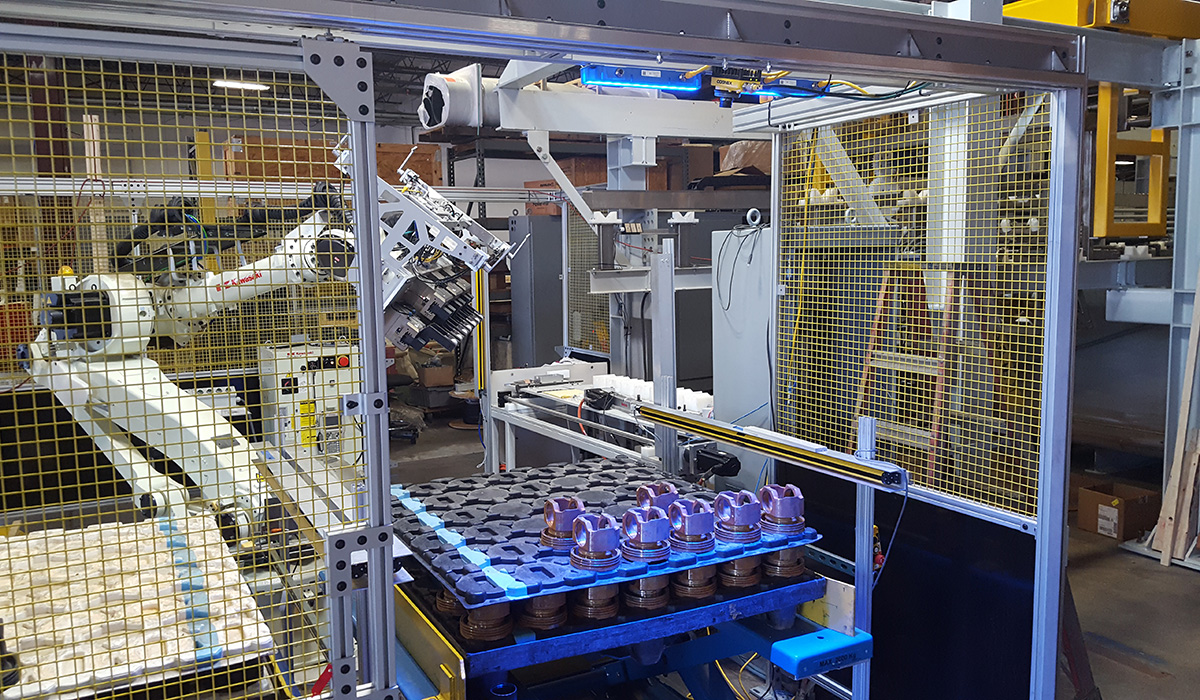

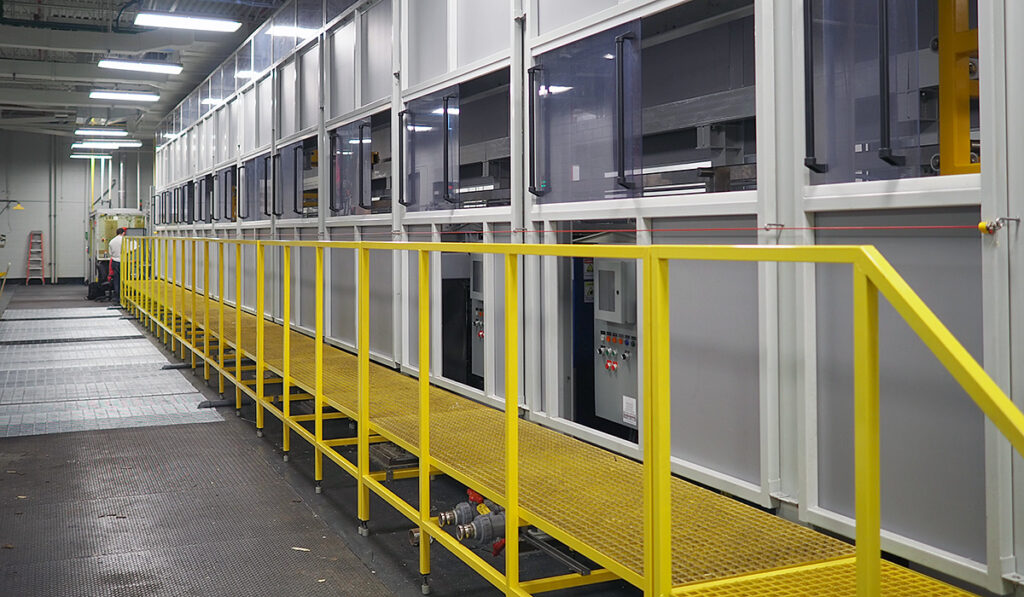
Precision Process develops application-specific conversion coating equipment for manufacturers that need dependable surface preparation, consistent finish quality, and better process control. Each system is built around your substrate, performance requirements, production environment, and facility rather than a standard equipment package.
Conversion coating chemically transforms the outermost layer of a metal into a thin, tightly bonded protective or adhesion-promoting surface. Depending on the application, it can improve paint adhesion, provide light corrosion resistance, support selected electrical requirements, reduce light reflection, or create a consistent identification finish.
Precision Process brings equipment engineering, process integration, and production requirements together in one coordinated solution. Whether your application calls for phosphate coating, chromate conversion, black oxide, or another approved treatment, the system is developed around the result your finished parts must achieve.
Develop the equipment around your parts, substrate, coating specification, production rate, available floor space, and operating requirements.
Support iron, zinc, or manganese phosphate; chromate conversion; black oxide; and other application-appropriate treatments.
Create a controlled surface that helps subsequent coatings bond more effectively when the selected process and specification require it.
Add light-duty corrosion resistance or prepare the surface for a more complete protective coating system.
Coordinate cleaning, rinsing, activation, conversion coating, sealing, drying, and related steps within one equipment scope.
Manage critical variables such as chemistry, concentration, temperature, pH, treatment time, loading, agitation, and rinsing.
Match manual, hoist-assisted, automated, or continuous handling to part geometry, production volume, and repeatability goals.
Plan around existing utilities, ventilation, wastewater requirements, upstream operations, downstream painting, and available space.
Work with one engineering team to coordinate tanks, controls, handling, ventilation, utilities, filtration, temperature management, and supporting equipment.
Balance finish performance with throughput, maintainability, operator access, safety, and future capacity requirements.
Every successful conversion coating system begins with the required surface result. Precision Process evaluates the complete application before translating those requirements into a coordinated equipment solution.
Identify the required corrosion protection, paint adhesion, wear behavior, electrical performance, appearance, or other approved finish requirement.
Review the substrate, part geometry, surface condition, coating specification, chemistry, production rate, handling needs, facility limitations, and downstream processes.
Map the cleaning, rinsing, activation, coating, sealing, drying, handling, ventilation, controls, and supporting process stages.
Configure the approved system around the technical requirements, production goals, operating environment, and project scope.
Coordinate testing, documentation, training, installation planning, and startup support as defined in the final agreement.
An aerospace components manufacturer needed a more consistent conversion coating on aluminum parts before painting. Its existing process produced variable surface preparation and incomplete coverage on complex features, increasing rework and creating risks for paint adhesion, corrosion performance, and production schedules.
A custom finishing systems provider worked with the manufacturer’s engineering, quality, and production teams to evaluate the alloy, part geometry, applicable finish requirements, cleaning sequence, bath chemistry, rinsing, material handling, controls, and facility constraints. The resulting turnkey conversion coating system integrated pretreatment, processing, rinsing, drying, ventilation, material handling, and process monitoring around the application.
Following implementation, the manufacturer achieved more uniform surface treatment, more consistent paint preparation, and better control over critical process conditions. The system reduced avoidable process variation and provided a more reliable foundation for meeting quality requirements and supporting future production demand.
Quality Manager, Aerospace Components Manufacturing
| EVALUATION FACTOR | PRECISION PROCESS TURNKEY SOLUTION | OFF-THE-SHELF EQUIPMENT | MULTI-VENDOR APPROACH |
| Application Fit | Engineered around the parts, substrate, finish requirements, production goals, and facility | Limited to available sizes, layouts, materials, and options | Individual components may be suitable but may not operate as one coordinated process |
| Process Selection | Begins with the required surface result and downstream performance | Often begins with the available equipment platform | Each supplier may focus on only one stage or equipment package |
| System Integration | Cleaning, rinsing, coating, sealing, drying, controls, handling, and ventilation can be coordinated | Additional engineering may be required to create a complete process | The manufacturer must coordinate interfaces among multiple suppliers |
| Process Control | Designed around the variables that affect coating consistency and performance | Standard controls may not match the required process window | Controls and operating logic may vary across separate packages |
| Customization | Tank sizes, materials, layout, automation, controls, and material flow can be tailored | Customization is generally limited to predetermined options | Changes may require redesign and coordination across vendors |
| Project Accountability | One engineering partner helps coordinate the approved turnkey scope | Responsibility may end with equipment delivery | Responsibility is divided among equipment, controls, process, installation, and service providers |
| Existing-System Integration | Existing equipment, utilities, controls, and workflow can be evaluated during development | Compatibility depends on the selected platform | Integration responsibility often remains with the manufacturer |
| Expansion Planning | Capacity, part mix, maintenance access, and future production needs can be considered early | Future flexibility depends on the standard platform | Expansion may add disconnected equipment, controls, or handling steps |
| Best Fit | Complex, specialized, integrated, or production-critical conversion coating applications | Straightforward applications that match a standard configuration | Organizations with internal resources to manage multiple specialists and interfaces |
Use this focused resource to explore how Precision Process resolves the core challenges of automated rack and barrel finishing—from eliminating coating variances on complex geometries and controlling chemical drag-out to preventing structural corrosion and streamlining facility utility integration. Gain practical, engineering-driven insights that demonstrate how our systems safeguard your uptime, yield, and long-term operational efficiency.
Conversion coating is a surface treatment that chemically transforms a thin outer layer of metal into a new compound that becomes part of the substrate. Unlike plating, it does not add a separate metal layer over the surface.
The appropriate process depends on the substrate, finish specification, corrosion exposure, downstream coating, electrical requirements, appearance, production goals, and final use. An application review helps determine whether phosphate coating, chromate conversion, black oxide, or another treatment is appropriate.
Common categories include iron, zinc, and manganese phosphate for steel or iron; chromate or alternative conversion coatings for metals such as aluminum and zinc; and black oxide for steel. Final process selection must be based on the applicable material, specification, performance target, and regulatory requirements.
Plating deposits another metal onto the part. Conversion coating reacts with and transforms the existing surface, producing a thinner treatment that is often used for pretreatment, adhesion, identification, or light corrosion protection.
Anodizing uses an electrochemical process to grow a controlled oxide layer, most commonly on aluminum. Many conversion coatings rely primarily on a chemical reaction and generally create a thinner surface treatment.
Yes, when the substrate, coating chemistry, preparation sequence, and downstream paint system are compatible. Phosphate and selected conversion coatings can create a surface that supports stronger and more consistent paint adhesion.
Yes. A system can be developed around part size, substrate, treatment chemistry, production volume, tank capacity, material handling, automation, controls, ventilation, utilities, wastewater considerations, operator access, and available floor space. Final capabilities depend on the approved project scope.
Integration may be possible after evaluating the condition, capacity, controls, layout, utilities, material flow, and process compatibility of the existing equipment. These factors should be reviewed during the application assessment.
Helpful information includes part drawings or dimensions, substrate material, required finish or specification, production volume, load size, current process details, downstream coating requirements, quality concerns, facility layout, utilities, and target schedule. If some information is unavailable, the conversation can begin with the surface-performance or production problem you need to solve.
Pricing depends on the process stages, system size, tank materials, production rate, material handling, automation, controls, ventilation, heating or cooling, wastewater requirements, testing, documentation, installation, and startup support. Precision Process can prepare project-specific pricing after reviewing the application and defining the technical scope.
Lead time depends on engineering complexity, system size, automation requirements, component availability, testing, documentation, delivery, and installation scope. A preliminary schedule can be developed after the main technical and production requirements are understood.
Equipment may be configured for an approved trivalent or chromate-free chemistry when it is compatible with the substrate, finish specification, performance requirements, and process supplier recommendations. Chemistry selection and regulatory compliance should be confirmed for the specific application and operating location.
A Precision Process representative will review the available part, process, production, and facility information and contact you to clarify the application, priorities, and next steps. Drawings and specifications can make the first discussion more productive, but they are not required to begin.
Whether you are adding a new conversion coating process, replacing aging equipment, improving pretreatment consistency, preparing for more production, or integrating finishing with an existing operation, Precision Process can help define the right path forward.