
Precious Metals
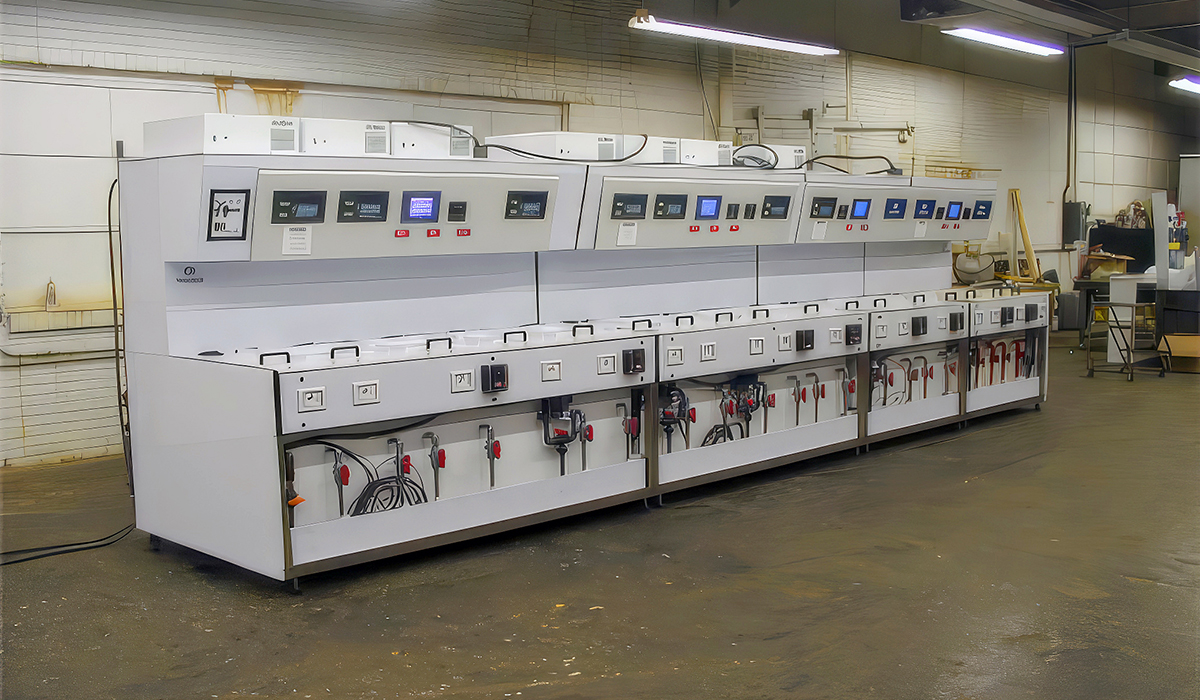

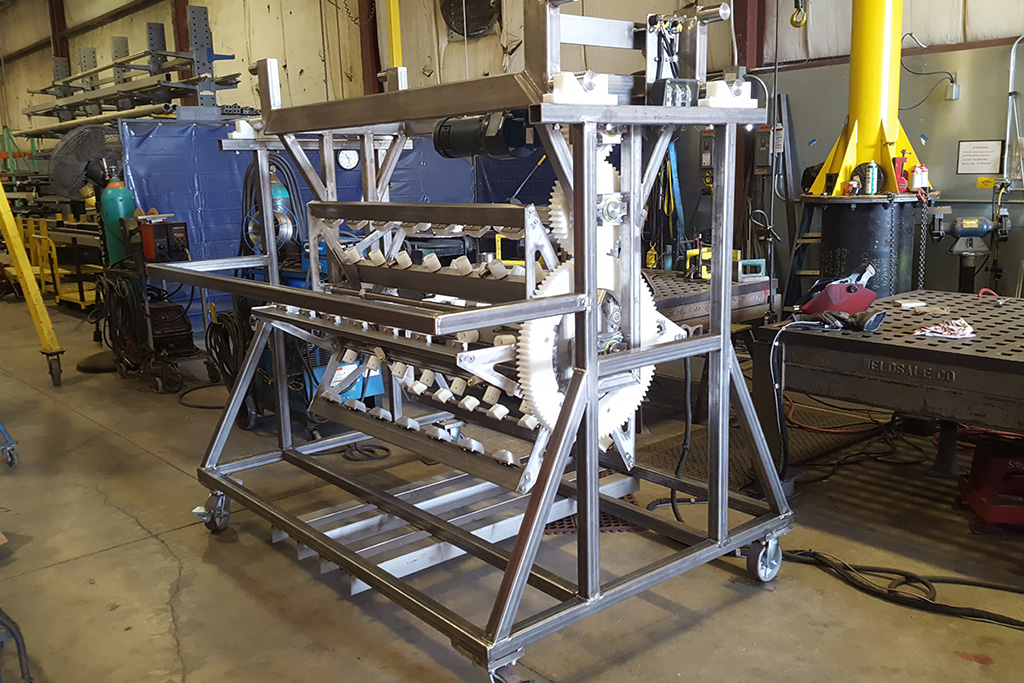
Precision Process engineers custom precious-metal plating systems for manufacturers that need greater control over material use, deposit consistency, and production performance. Our specialized experience in plating equipment, automation, and process integration helps turn demanding applications into practical, turnkey solutions.
Gold, silver, platinum-group metals, and other high-value finishes require precision. We design equipment around your part, process, production goals, and facility so you can protect valuable material without compromising quality.
Precious metals are rare, naturally occurring metals valued for their scarcity and useful physical properties. Unlike many base metals, they resist corrosion and oxidation, conduct electricity, withstand demanding conditions, or support important chemical reactions.
These qualities make precious metals essential in functional and decorative plating. Gold and silver are widely used on electrical contacts and connectors. Rhodium creates a bright, tarnish-resistant finish. Platinum and palladium support specialized industrial, electronic, and catalytic applications.
Platinum, palladium, rhodium, ruthenium, iridium, and osmium are collectively known as platinum group metals, or PGMs. They have similar chemical properties and often occur together in natural ore deposits.
Resists corrosion and tarnish while providing excellent electrical conductivity and malleability. It is commonly used in electronics, connectors, circuit boards, aerospace, dentistry, jewelry, and investment products.
Offers the highest electrical and thermal conductivity of any metal and has antimicrobial properties. Applications include electronics, solar panels, mirrors, jewelry, and silverware.
Withstands corrosion and high temperatures. It is used in catalytic converters, industrial catalysts, laboratory equipment, and jewelry.
Provides strong catalytic performance and is used in automotive systems, electronics, dentistry, and other specialized applications.
Delivers a highly reflective, corrosion-resistant finish. It is commonly used in decorative plating, mirrors, and catalytic converters.
Remains hard, dense, and corrosion-resistant at high temperatures. Applications include spark plugs, scientific instruments, and specialized electronics.
Support specialized uses in electronics, alloys, and industrial applications.
Precious-metal plating demands exceptional accuracy because inconsistent coverage, excessive material use, and inadequate process control can compromise product quality while increasing operating costs. Precision Process engineers application-specific systems that give manufacturers greater control over deposit thickness, coverage, chemistry, temperature, electrical parameters, material handling, and production flow. By integrating specialized equipment, automation, and process controls, each system helps apply high-value finishes accurately, consistently, and efficiently while reducing waste, supporting repeatable results, and meeting demanding production requirements.
Apply precious metal to the functional area of a part instead of coating surfaces that do not require it.
Build the system around your part geometry, base material, finish requirements, chemistry, and production targets.
Support high-volume applications with reel-to-reel configurations when appropriate.
Coordinate plating, rinsing, material handling, controls, and related process steps in one system.
Improve control over deposit location and process conditions from one run to the next.
Plan around your available floor space, existing equipment, utilities, and future capacity needs.
Work with one engineering team from initial concept through equipment startup.

An electrical connector manufacturer needed to maintain reliable contact performance while reducing precious-metal coverage in nonfunctional areas. Its existing process limited control over deposit location and exposed the operation to unnecessary material costs.
Precision Process developed a custom continuous plating concept designed to place the required finish on the contact area while coordinating handling, process stages, and controls. The targeted approach gave the manufacturer a path to tighter deposit control, more consistent production, and lower precious-metal use per part.
Electrical Connector Manufacturer
| EVALUATION AREA | PRECISION PROCESS CUSTOM SYSTEM | STANDARD EQUIPMENT OR PIECED-TOGETHER APPROACH |
| Precious-metal control | Can target functional areas through application-specific selective plating | May apply material more broadly than the part requires |
| Process fit | Engineered around the part, finish, output, and facility | Often requires the operation to adapt to fixed equipment |
| Integration | Process stages, handling, automation, and controls are designed together | Components from different sources may create integration gaps |
| Production flexibility | Configuration reflects current requirements and anticipated needs | Fixed designs may limit later process or capacity changes |
| Engineering access | Direct collaboration from concept through startup | Support may focus on equipment selection rather than the complete process |
| Total operating value | Designed to balance material use, repeatability, labor, and throughput | A lower initial price may be offset by waste, rework, labor, or later modifications |
Every custom precious-metal plating system begins with a detailed evaluation of the application, including part geometry, substrate, finish specifications, deposit location, production volume, line speed, chemistry, automation, available floor space, utilities, and integration requirements. These factors help determine the appropriate process configuration, project cost, and completion schedule. When suitable, selective plating methods can apply gold, silver, platinum-group metals, and other high-value finishes only where needed, reducing unnecessary material use. Systems can also be engineered to integrate with existing equipment, controls, material flow, and upstream or downstream operations. Providing part drawings or samples, deposit requirements, production targets, facility information, and current process challenges allows Precision Process to develop an application-specific solution rather than limiting the operation to standard, off-the-shelf equipment.
Cost depends on part geometry, finish requirements, deposit location, production volume, line speed, chemistry, automation, controls, footprint, and integration needs. An initial application review helps define a realistic scope and budget.
Lead time depends on the system’s size and complexity. Engineering, fabrication, integration, testing, installation planning, and startup requirements are considered when Precision Process develops the project schedule.
Yes, when the part and process are suitable for selective plating. Stripe, spot, or other targeted approaches can reduce coverage on areas that do not require a precious-metal finish.
A system may be designed for gold, silver, platinum-group metals, or other finishes based on the application. The appropriate configuration depends on the substrate, chemistry, deposit requirements, production goals, and end use.
Yes. The engineering review can account for existing equipment, material flow, available floor space, utilities, automation, controls, and upstream or downstream processes.
Helpful information includes:
Precision Process focuses on application-specific equipment. The scope is developed around the manufacturing challenge rather than forcing the application into a predetermined configuration.
Whether you are planning a new line, replacing aging equipment, reducing unnecessary precious-metal use, or automating a demanding process, Precision Process can help you define the right path forward.