
ElectroPolishing
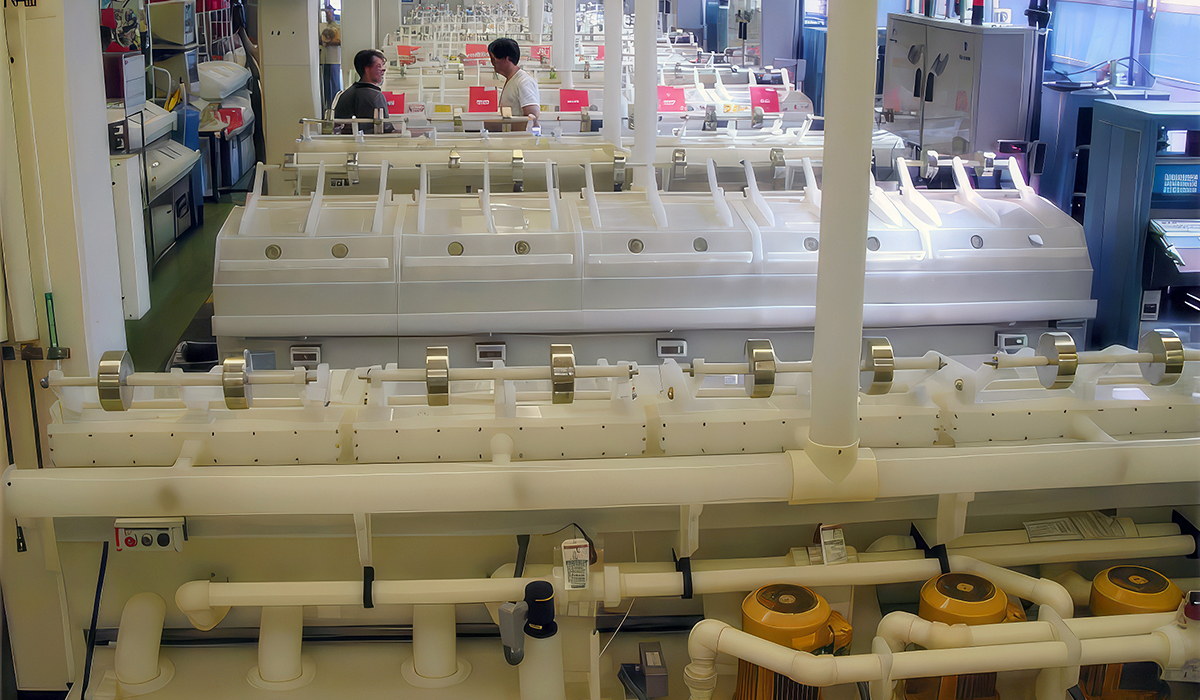

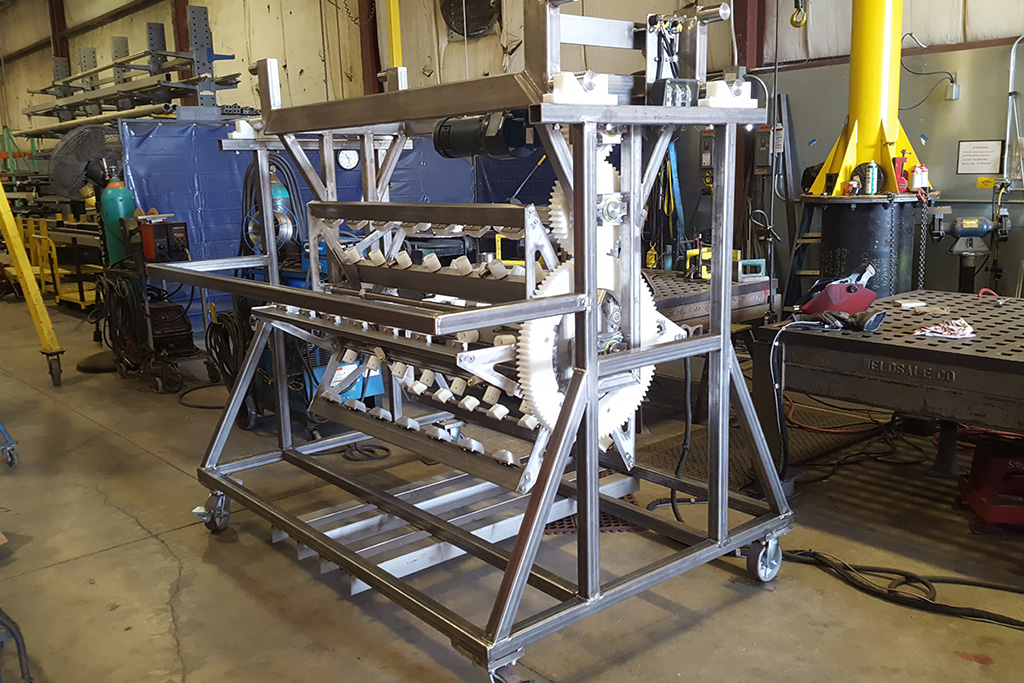
Precision Process helps manufacturers develop systems that remove microscopic surface irregularities, burrs, and contaminants from metal parts. Our engineering team turns complex part, finish, chemistry, and production requirements into a coordinated turnkey electropolishing solution.
Electropolishing is an electrochemical process that removes a controlled amount of metal from a part’s surface. Microscopic high points dissolve faster than recessed areas, creating a smoother, brighter, and cleaner finish without applying a separate coating.
Precision Process engineers the equipment needed to control the complete operation, including cleaning, racking, electrical power, electrolyte temperature, treatment time, rinsing, drying, ventilation, and material handling. The result is a system developed around the surface quality, capacity, cleanliness, and operating requirements your application demands.
Reduce microscopic peaks and irregularities to improve finish and lower surface roughness.
Create a surface with fewer crevices where bacteria, particles, product residue, or contaminants can collect.
Remove free iron and surface contamination from stainless steel while supporting its natural protective oxide layer.
Remove small burrs and sharp microscopic edges, including features that may be difficult to reach mechanically.
Improve surface smoothness for parts that slide, rotate, seal, or contact other components.
Produce a clean, bright, or satin-like finish without leaving buffing compounds on the surface.
Develop the equipment around your alloy, part geometry, surface-finish target, material-removal limits, production rate, and facility.
Coordinate cleaning, electropolishing, rinsing, neutralizing, drying, controls, ventilation, and handling within one solution.
Design around current density, voltage, electrolyte chemistry, temperature, treatment time, agitation, and part loading.
Successful electropolishing begins with a clear understanding of the required surface condition and how the equipment must achieve it. Precision Process evaluates your parts, materials, specifications, production goals, and facility requirements before coordinating each process stage into a turnkey system designed for consistent, dependable operation.
We begin with the material, starting condition, desired roughness, cleanliness, corrosion performance, appearance, dimensional limits, and applicable specification.
Our engineering team reviews part geometry, alloy, welds, burrs, racking, electrical contact, chemistry, production volume, handling, utilities, and facility constraints.
We map cleaning, electropolishing, rinsing, neutralizing, drying, rectification, temperature control, ventilation, filtration, and material flow.
Precision Process develops the approved equipment system around the process window, operating requirements, and project scope.
Testing, documentation, training, installation, and startup support are coordinated as defined in the final agreement.
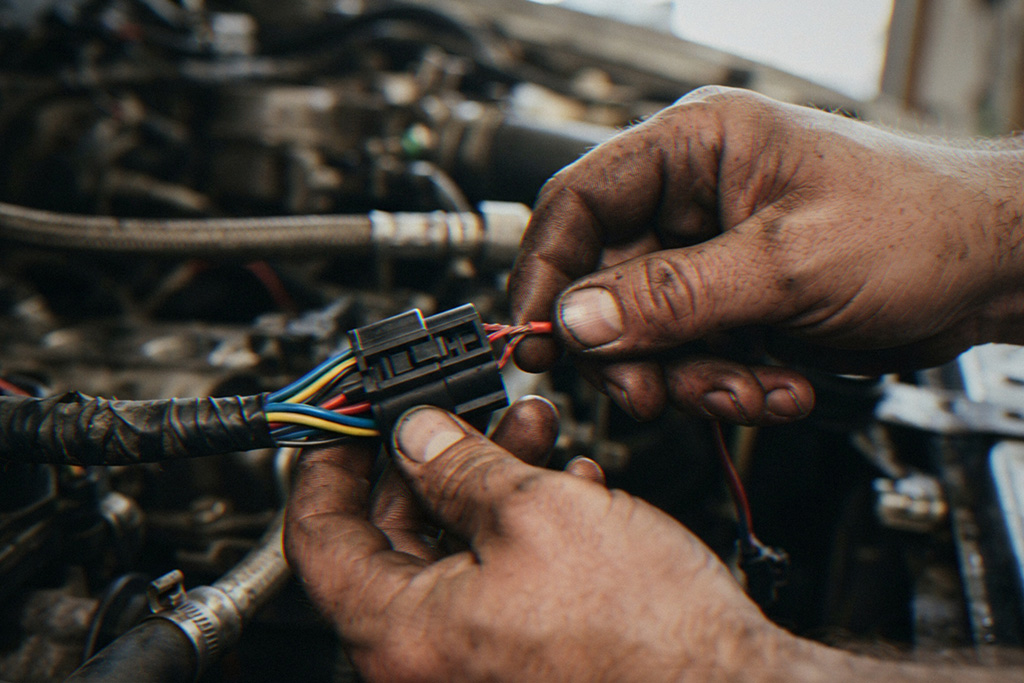
In this hypothetical example, a medical-device manufacturer needed to improve the surface quality of 316L stainless-steel components. Its existing finishing method left excessive surface roughness, microscopic burrs, and areas that were difficult to clean, creating risks for cleanliness, corrosion resistance, product quality, and customer acceptance.
Precision Process worked with the manufacturer’s engineering, quality, and production teams to evaluate the alloy, component geometry, initial surface condition, target finish, material-removal limits, process chemistry, loading requirements, and facility constraints. The resulting turnkey system integrated cleaning, electropolishing, rinsing, neutralizing, drying, electrical controls, ventilation, and material handling around the application.
Following implementation, the manufacturer achieved smoother, cleaner, and more consistent component surfaces while reducing manual finishing and rework. Finished parts reliably met the established surface-finish, cleanliness, appearance, and dimensional requirements, and the operation gained a more controlled process capable of supporting increased production.
Quality Manager, Medical-Device Manufacturing
| EVALUATION FACTOR | PRECISION PROCESS TURNKEY SYSTEM | MECHANICAL POLISHING OR BUFFING | STANDARD EQUIPMENT |
| Surface treatment | Removes microscopic high points electrochemically without adding a coating | Abrasive tools physically smooth accessible surfaces | Performance depends on how well the standard design fits the application |
| Complex geometry | Can treat exposed recesses and difficult features reached by the electrolyte and electrical field | Tool access can limit consistency in tight or complex areas | Tank, cathode, and racking options may be limited |
| Surface contamination | Can remove free iron and embedded surface contamination from stainless steel | May leave abrasive residue or buffing compounds if not cleaned thoroughly | Cleaning and rinsing stages may require separate equipment |
| Micro-deburring | Removes small burrs and smooths microscopic edges | Results can depend heavily on operator skill and access | Control may not match the required material-removal range |
| Consistency | Current, temperature, chemistry, and time can be controlled within a defined process window | Manual results may vary among operators and parts | Standard controls may not fit the material, geometry, or specification |
| System integration | Cleaning, processing, rinsing, neutralizing, drying, controls, and handling can be coordinated | Often requires separate cleaning and finishing operations | The customer may need to integrate additional stages or suppliers |
| Customization | Tanks, cathodes, racks, rectification, cooling, ventilation, automation, and material flow can be tailored | Fixtures and tooling may be adapted, but the method remains access-dependent | Options are generally limited to standard configurations |
| Best fit | Specialized, repeatable, cleanliness-critical, or production-scale applications | Localized finishing, low-volume work, or surfaces that require directional polishing | Straightforward applications that fit an existing platform |
Understanding how electropolishing works, what materials it can process, and which equipment factors influence surface quality is essential when evaluating a new system. These frequently asked questions explain process capabilities, customization options, project costs, lead times, integration requirements, and the information Precision Process needs to develop an application-specific solution.
Electropolishing is an electrochemical finishing process that removes a controlled amount of metal from a part’s surface. It smooths microscopic peaks, removes contaminants, and can create a cleaner and brighter finish.
No. It does not add a new material or create a separate coating layer. Electropolishing removes material from the existing surface.
Electropolishing removes metal and smooths the surface while supporting the passive condition of stainless steel. Chemical passivation primarily removes free iron and promotes a corrosion-resistant surface without intentionally leveling the metal to the same degree.
Stainless steel is the most common, but aluminum, titanium, copper, brass, and selected other alloys may also be processed. The chemistry and operating conditions must be matched to the material and required result.
Material removal depends on the alloy, chemistry, current density, temperature, treatment time, geometry, and required finish. Critical dimensions and acceptable removal limits should be defined before the equipment and process are finalized.
Not necessarily. The process is most effective for microscopic smoothing and light deburring. Deep scratches, pits, scale, heavy weld discoloration, or major surface defects may require mechanical finishing or other pretreatment first.
Yes. Equipment can be developed around part size, geometry, alloy, finish target, production volume, tank capacity, racks, cathodes, rectifiers, temperature control, ventilation, filtration, automation, rinsing, neutralization, drying, and available floor space. Final capabilities depend on the approved scope.
Helpful information includes part drawings, alloy, initial and target surface roughness, acceptable material removal, finish or cleanliness specification, annual or hourly volume, load size, current finishing method, quality concerns, utilities, facility layout, and target schedule.
Pricing depends on system size, chemistry, tank materials, rectification, cooling or heating, ventilation, filtration, material handling, automation, controls, rinsing, neutralization, wastewater requirements, documentation, testing, installation, and startup support. Project-specific pricing can be developed after the required scope is understood.
Lead time depends on engineering complexity, process development needs, system size, automation, component availability, testing, and installation scope. Precision Process can provide a preliminary schedule after reviewing the main technical and production requirements.
Integration may be possible after evaluating the existing tanks, controls, rectifiers, ventilation, utilities, layout, material flow, capacity, and chemical compatibility.
Common applications include medical and pharmaceutical equipment, food and beverage processing systems, semiconductor components, aerospace parts, and architectural or decorative stainless steel.
A Precision Process representative will review the available part, material, finish, production, and facility information and contact you to discuss the application. Drawings, specifications, and sample-part data are helpful but not required for an initial conversation.
Whether you are replacing manual finishing, improving cleanability, reducing microscopic burrs, or bringing a critical surface process in-house, Precision Process can help translate your requirements into a practical turnkey equipment solution.