
Engineering Precision
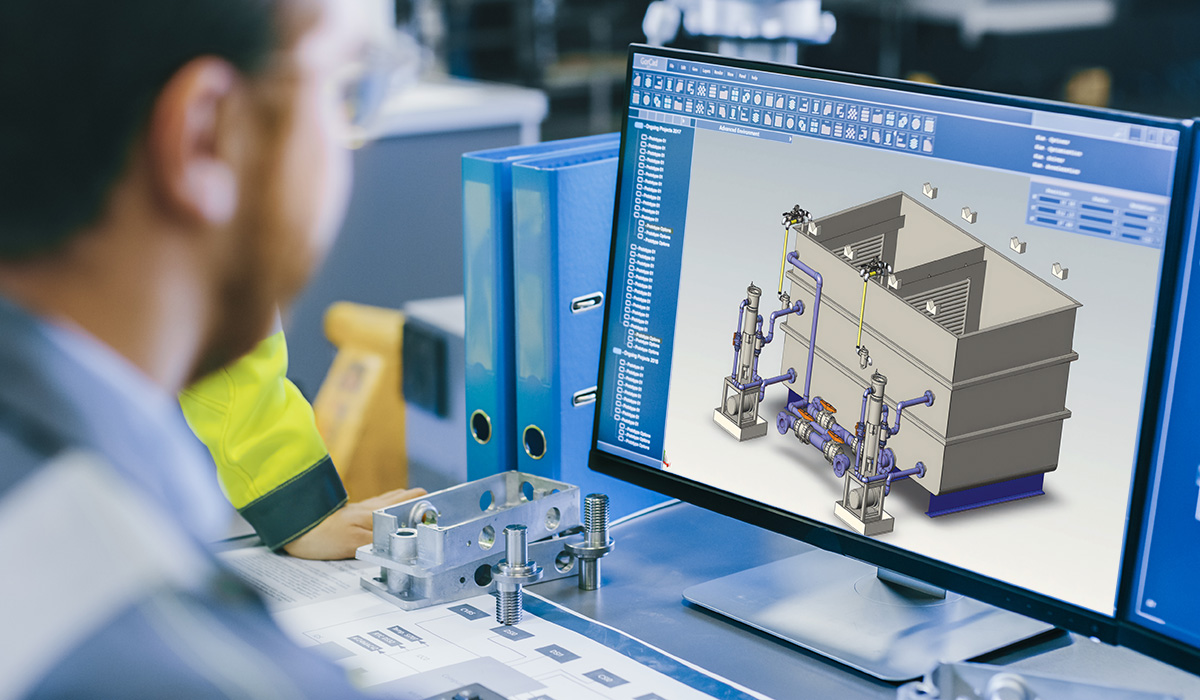

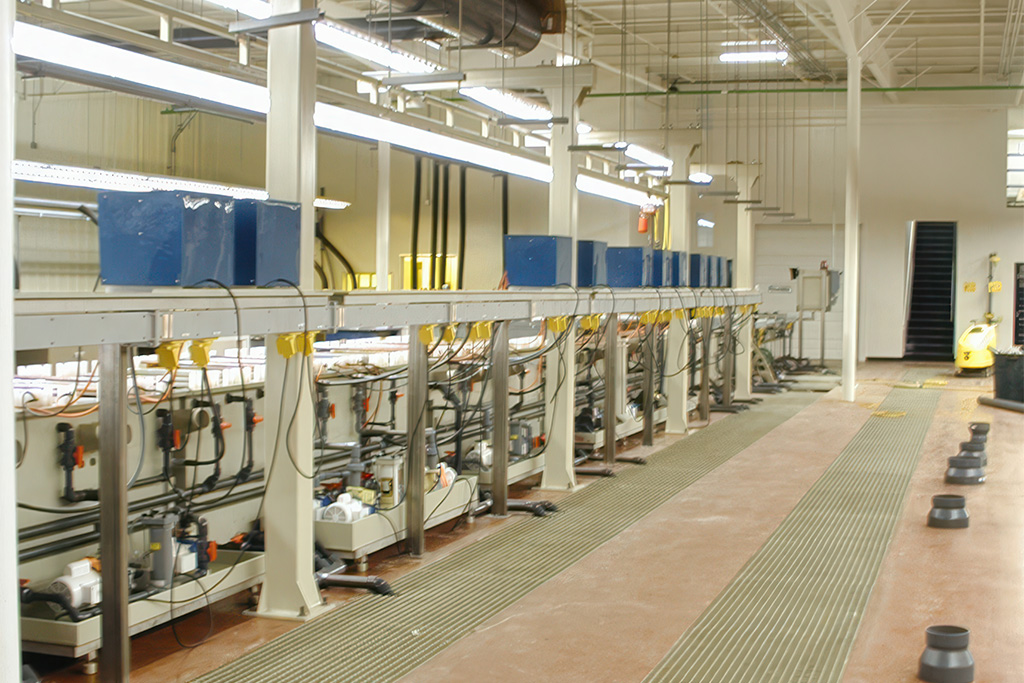
Precision-engineered equipment helps you improve consistency, protect uptime, and move production forward with confidence.
Precision Process brings niche expertise in surface finishing, automation, and custom equipment integration to every project. We engineer practical, turnkey systems for manufacturers that need greater control, dependable performance, and a solution built around their process.
Your equipment has to do more than work on paper. It must perform reliably in demanding production conditions, fit your operation, and adapt as your needs change. Precision Process combines engineering, automation, and process knowledge to deliver equipment that supports consistent results from day one.
Every system is engineered around your parts, production goals, chemistry, floor space, and operating requirements.
Intelligent controls help maintain repeatable timing, movement, and process conditions.
Materials and components are selected to withstand the chemicals and operating environment of your application.
Equipment is designed for continuous use, easier maintenance, and long-term performance.
Selective plating systems support accurate stripe and spot placement where exact coverage matters.
From individual process cells to fully automated hoist lines, controls and equipment work together as one complete system.
New equipment, process stages, and controls can be designed to work with your existing infrastructure.
Modular designs make it easier to expand capacity, add functions, or respond to changing production demands.
Targeted retrofits can improve the capability, reliability, and useful life of existing equipment.
Every successful equipment project begins with a clear understanding of the production challenge. Precision Process works closely with your team to evaluate your parts, processes, performance goals, facility requirements, and existing operations. From concept development and detailed engineering through fabrication, testing, installation, and ongoing support, our structured approach transforms complex requirements into a fully integrated, turnkey system built for safe, consistent, and dependable production.
Our engineering team learns about your parts, process, production targets, current equipment, facility requirements, and performance concerns.
We evaluate mechanical, chemical, automation, safety, and integration needs to shape a practical equipment strategy.
Detailed design brings equipment, controls, materials, process stages, and supporting systems together.
The system is assembled and tested against agreed requirements before it reaches your production floor.
We help integrate the equipment, prepare your team, and provide ongoing support for dependable operation.

A Director of Operations at a high-volume aerospace component manufacturer needed to improve finishing consistency without disrupting production. Aging equipment and manual process adjustments were contributing to variable results, excess rework, and unplanned downtime.
A precision-engineered surface-finishing system was designed to integrate with the facility’s existing infrastructure. Automated controls, accurate chemical management, and tightly controlled process stages improved repeatability while giving operators greater visibility into performance.
The hypothetical solution increased throughput by 20%, reduced rework by 15%, and cut unplanned downtime by 10%. It also expanded production capacity without requiring a facility expansion or complete equipment replacement.
| EVALUATION AREA | PRECISION PROCESS | OFF-THE-SHELF EQUIPMENT | IN-HOUSE DEVELOPMENT | SINGLE-DISCIPLINE SUPPLIER |
| Fit for your process | Engineered around your parts, chemistry, throughput, and facility | May require your process to fit a standard design | Can be tailored, depending on available expertise | Often optimized for only one part of the system |
| Surface finishing expertise | Specialized process and equipment knowledge | Varies by manufacturer | Depends on internal experience | May lack full process understanding |
| Mechanical, chemical, and controls integration | Coordinated as one complete solution | Integration may require additional vendors | Managed across internal teams and contractors | Other disciplines may be outsourced |
| Existing equipment integration | Designed to work with current infrastructure when practical | Compatibility may be limited | Possible, but can demand significant internal resources | Integration responsibility may remain with the customer |
| Scalability | Modular options support future stages and capacity | Expansion may be restricted to standard options | Requires additional internal design effort | May require redesign across multiple vendors |
| Retrofits and upgrades | Existing systems can be evaluated for targeted improvements | Replacement may be the primary option | Depends on internal bandwidth and documentation | Scope may be limited to supplied components |
| Project accountability | One engineering partner from concept through integration | Customer may coordinate several providers | Customer owns coordination and risk | Responsibility may be divided among suppliers |
| Long-term value | Focused on performance, maintainability, and useful equipment life | Lower initial complexity, but less flexibility | High control, with greater resource demand | Results depend on coordination with other providers |
Director of Operations, Aerospace Industry
Our turnkey systems are tailored to each project, so cost, lead time, and scope are shaped by your capacity goals, process needs, and site conditions. Whether you need a retrofit, a modular upgrade, or a full replacement, we provide a clear path from discovery through engineering, installation, and commissioning, with customized solutions for process performance, compliance, and long-term reliability.
Pricing depends on the process, production capacity, automation level, materials, controls, integration requirements, and project scope. After reviewing your requirements, Precision Process can define the solution and provide a project-specific proposal.
Useful starting information includes part drawings, production volumes, process steps, chemistry, quality requirements, available floor space, utility details, existing equipment information, and your target schedule. If some details are still unknown, our engineering team can help identify what is needed.
Lead time varies with system size, technical complexity, component availability, testing requirements, and installation scope. A project schedule is established after the requirements and deliverables are defined.
Yes. Precision Process develops equipment around the needs of the application rather than forcing every customer into a standard configuration. Systems can be tailored for parts, chemistry, handling, controls, safety, space, capacity, and integration requirements.
Yes, when the condition and capabilities of the existing system support integration. Our team evaluates interfaces, controls, utilities, process flow, and physical constraints before recommending an approach.
Yes. A retrofit may be appropriate when the existing equipment has a sound foundation but needs improved controls, additional process stages, upgraded components, greater capacity, or better reliability.
Yes. Modular equipment and control architecture can support future capacity increases, new stages, and process changes when expansion is considered during the initial design.
Materials, components, enclosures, and construction methods are selected with the process chemistry and operating environment in mind. Chemical compatibility is considered as part of the complete system design.
Support can include startup assistance, system documentation, operator or maintenance training, troubleshooting, replacement parts, and future upgrades, depending on the project scope.
Whether you are planning a new line, adding capacity, improving process control, or extending the life of existing equipment, Precision Process can help you define the right path forward.