
Anondizing
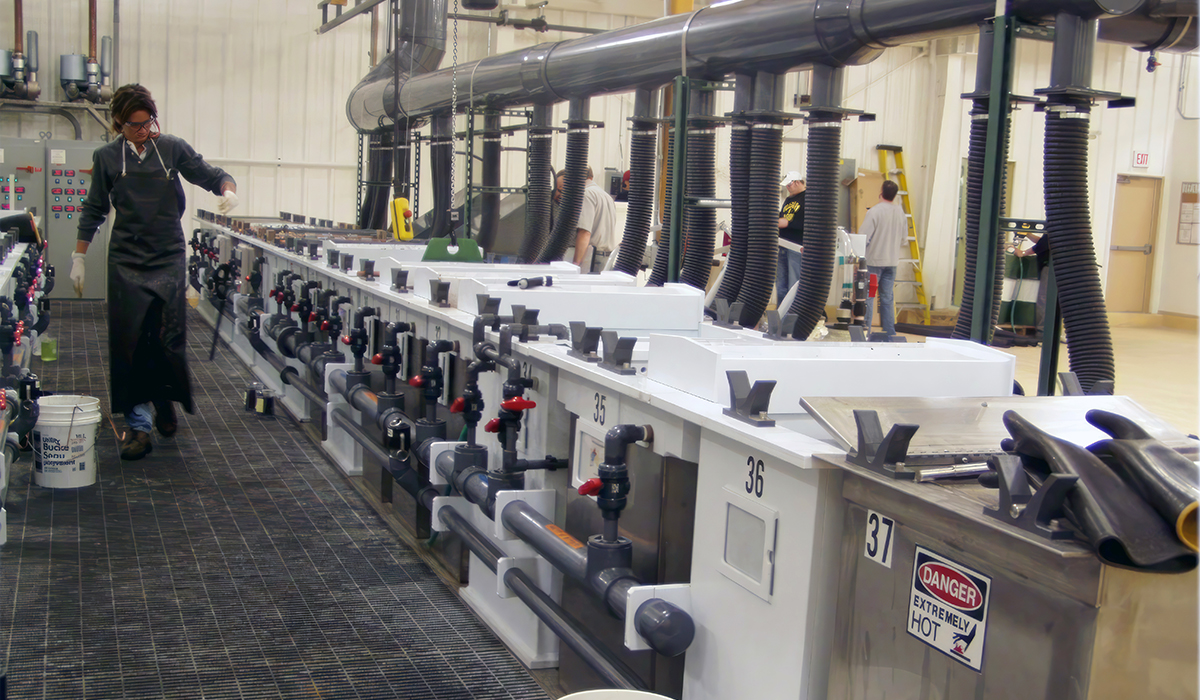

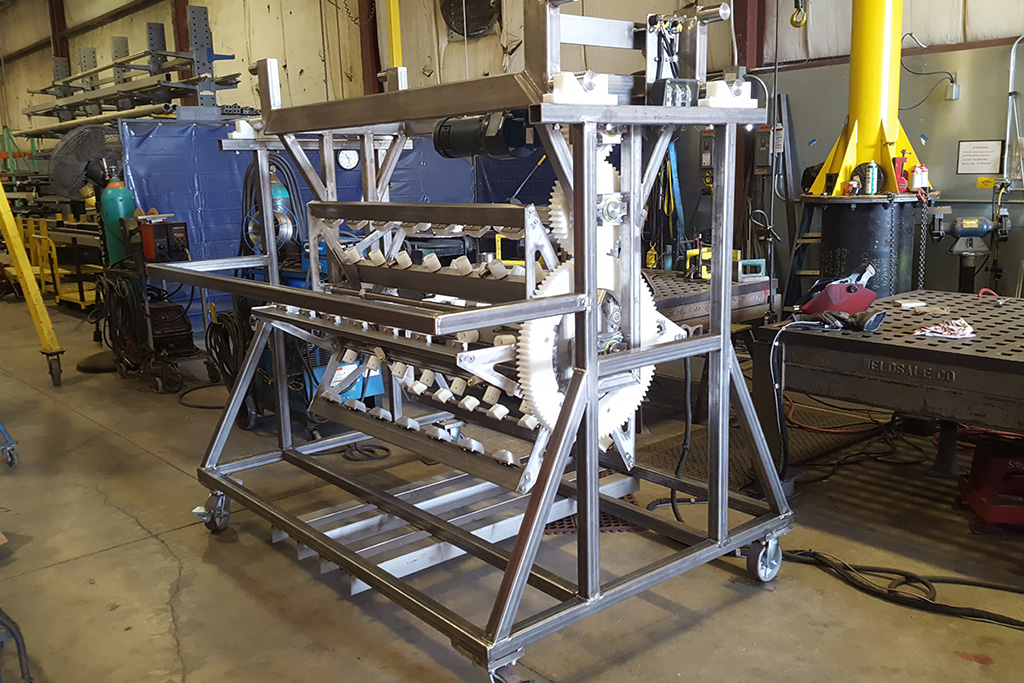
Precision Process helps manufacturers develop anodizing systems that improve corrosion resistance, wear resistance, electrical insulation, coating adhesion, and surface appearance. Our engineering team transforms complex process and production requirements into a coordinated turnkey equipment solution.
Anodizing strengthens and thickens the natural oxide layer on a metal surface, most commonly aluminum. Unlike plating, which deposits a different metal on top, anodizing transforms the part’s own surface into a durable oxide layer that becomes integrated with the base material.
Precision Process engineers the equipment needed to control each stage, from cleaning and pretreatment through anodizing, coloring, sealing, rinsing, and handling. The result is a system developed around the finish, performance, capacity, and operating requirements you need to achieve.
Create a more stable surface that helps protect metal parts in demanding environments.
Produce a harder oxide layer that helps parts withstand abrasion and repeated use.
Add a nonconductive surface where electrical isolation or dielectric strength matters.
Create a porous surface that helps properly selected paints, adhesives, and secondary coatings bond.
Support dyed or natural finishes when color, identification, or visual consistency is required.
Develop the equipment around your alloy, parts, finish specification, production rate, floor space, utilities, and handling needs.
Coordinate pretreatment, anodizing, rinsing, coloring, sealing, controls, ventilation, cooling, and material handling within one system.
Design for repeatable management of bath temperature, current, voltage, treatment time, chemistry, agitation, and rinsing.
Work with one engineering partner from early requirements through the approved equipment, testing, documentation, and implementation scope.
Every successful anodizing system begins with a complete understanding of the required finish, component specifications, production goals, and operating environment. Precision Process evaluates each critical factor, from alloy composition, part geometry, and bath chemistry to electrical contact, temperature control, ventilation, material handling, and safety. These requirements guide the engineering, construction, testing, training, installation, and startup of a coordinated turnkey system built for dependable production.
We begin with the anodizing type, applicable specification, oxide thickness, color, corrosion resistance, wear resistance, electrical properties, and production goals.
Our team reviews the alloy, part geometry, surface condition, racking, electrical contact, bath chemistry, rinsing, sealing, handling, utilities, and facility constraints.
We map the required process stages, tanks, rectification, temperature control, ventilation, filtration, material flow, controls, and safety considerations.
Precision Process develops the approved system around your technical requirements, operating needs, and project scope.
Testing, documentation, training, installation, and startup support are coordinated according to the final agreement.
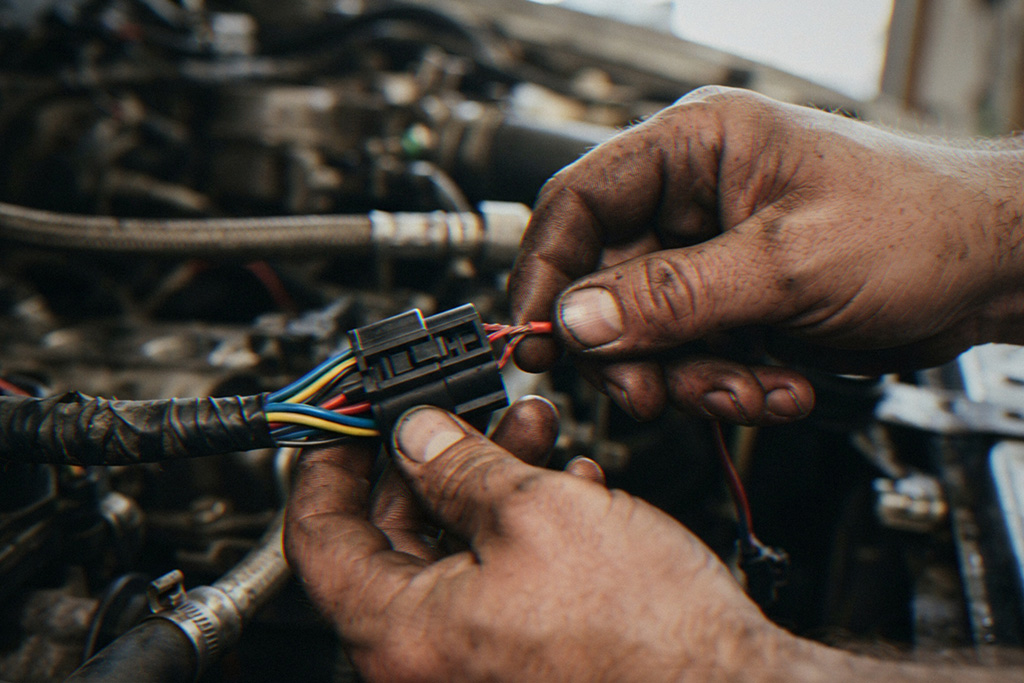
A heavy-equipment manufacturer needed Type III hardcoat anodizing for aluminum hydraulic components to achieve demanding wear-resistance and oxide-thickness requirements. Its existing operation produced uneven oxide thickness and premature wear, leading to excessive rework and creating risks for product quality, delivery schedules, and customer acceptance.
A custom finishing systems provider collaborated with the manufacturer’s engineering, quality, and production teams to evaluate the aluminum alloy, component geometry, racking, electrical requirements, bath chemistry, temperature control, material flow, and facility limitations. The resulting turnkey anodizing system integrated pretreatment, anodizing, rinsing, sealing, material handling, and process controls around the required finish.
After implementation, the manufacturer reduced rework, improved production capacity, and maintained oxide thickness within the required tolerance. Finished components consistently achieved the approved wear-resistance and quality requirements, giving the Quality Manager, Heavy-Equipment Manufacturing, greater confidence in process control and production reliability.
Quality Manager, Heavy-Equipment Manufacturing
| EVALUATION FACTOR | PRECISION PROCESS TURNKEY SYSTEM | STANDARD EQUIPMENT | PLATING OR CONVERSION COATING ALTERNATIVE |
| Application fit | Engineered around the alloy, parts, specification, throughput, and facility | Limited to available configurations and options | May provide a different surface structure or level of protection |
| Process integration | Pretreatment, anodizing, rinsing, coloring, sealing, controls, and handling can be coordinated | Additional engineering or suppliers may be required | Process stages and equipment differ by treatment |
| Surface result | Grows a controlled oxide layer into and above the base-metal surface | Depends on how well the standard equipment supports the process | Plating adds another metal; conversion coating creates a thinner converted layer |
| Wear and corrosion performance | Can support applications requiring durable, corrosion-resistant finishes | Results depend on system control and application fit | Performance depends on the selected coating and specification |
| Process control | Designed around current, voltage, temperature, time, chemistry, cooling, and load requirements | Standard controls may not match the required process window | Control requirements differ for deposited or chemically converted coatings |
| Customization | Tank sizing, racking, material flow, automation, ventilation, and utilities can be tailored | Customization is generally limited | Suitability depends on substrate, finish requirements, and operating priorities |
| Project coordination | One engineering partner helps coordinate the approved turnkey scope | The customer may need to manage several vendors | Separate specialists may be needed for process and equipment integration |
| Best fit | Specialized, production-critical, or specification-driven anodizing applications | Straightforward applications that fit a standard design | Applications better served by a deposited metal or thinner chemical pretreatment |
Understanding anodizing methods, material compatibility, finish requirements, equipment options, project costs, and implementation timelines is essential when planning a successful system. These frequently asked questions explain the factors that shape process selection and show how Precision Process develops application-specific anodizing equipment around your parts, production goals, facility, and performance requirements.
Anodizing is an electrochemical process that converts a metal’s surface into a controlled oxide layer. It is most often used on aluminum, although selected processes can be used on titanium, magnesium, zinc, and other metals that form stable oxides.
Plating deposits a different metal onto the part. Anodizing transforms the substrate’s own surface, creating an oxide layer that grows partly into and partly above the base metal.
Aluminum is the most common material. Titanium, magnesium, zinc, tantalum, and other suitable metals may also be processed using application-specific methods. Conventional anodizing is not used on steel.
The choice depends on the material, applicable specification, required thickness, corrosion exposure, wear conditions, fatigue considerations, electrical properties, color, and final use. Type I, Type II, and Type III each serve different priorities.
Yes. An anodizing system can be developed around part size, alloy, finish type, production volume, tank capacity, racking, automation, rectification, cooling, ventilation, rinsing, sealing, controls, utilities, and available floor space. Final capabilities depend on the approved scope.
Helpful information includes part drawings, alloy, finish specification, anodizing type, required thickness, color, annual or hourly volume, load size, current process details, quality concerns, facility layout, utilities, and target schedule. If some details are unknown, begin with the performance problem or production goal.
Pricing depends on system size, process stages, tank materials, rectifiers, cooling, ventilation, filtration, material handling, automation, controls, wastewater requirements, testing, documentation, installation, and startup support. Precision Process can prepare project-specific pricing after the technical scope is defined.
Lead time depends on application complexity, system size, engineering requirements, automation, component availability, testing, and installation scope. A preliminary schedule can be developed after the main technical and production requirements are understood.
Integration may be possible after reviewing the condition, capacity, controls, layout, utilities, and process compatibility of the existing equipment. These factors should be addressed during the application assessment.
Yes. The porous oxide layer produced by many anodizing processes can absorb selected dyes before sealing. Available colors and final appearance depend on the alloy, surface preparation, anodizing process, dye system, thickness, and sealing method.
The oxide layer is generally nonconductive. This can provide electrical insulation and dielectric strength, but contact points or conductive areas may need to be masked or otherwise considered in the process design.
A Precision Process representative will review the available part, finish, production, and facility information and contact you to discuss the application. Drawings and specifications can help accelerate the evaluation but are not required for the first conversation.
Whether you are adding anodizing, replacing constrained equipment, improving finish consistency, or preparing for more production, Precision Process can help turn your requirements into a practical turnkey equipment solution.